Evaluating the Role of Baby Playpens
Parenting requires constant attention to both safety and development, particularly in the earliest years of a child’s life. Baby playpens have become an essential tool for modern parents, providing a secure and controlled environment where infants and toddlers can explore safely. They combine protection from household hazards with a structured space for independent play, supporting both physical and cognitive development.
Playpens serve more than just a containment function—they are developmental aids that help babies gain confidence, practice motor skills, and interact with their surroundings in a controlled manner. As children grow, the role of a playpen evolves, adapting to new stages of mobility and curiosity. Selecting the appropriate age and type of playpen ensures that parents maximize safety while promoting growth, making it a worthwhile investment for many families.
By carefully evaluating a child’s developmental stage, home environment, and supervision needs, parents can choose a playpen that enhances their baby’s growth and provides peace of mind, creating a balance between safety, independence, and engagement.
Safety Advantages of Baby Playpens
Creating a Controlled Environment for Babies
Safety is the primary reason parents consider baby playpens. A well-constructed playpen provides a defined boundary that keeps infants away from potential hazards such as stairs, electrical outlets, or sharp furniture edges. Within a controlled playpen space, babies can move freely, explore their surroundings, and interact with toys without constant risk of injury.
Playpens allow parents to create a secure zone where supervision is manageable, while the child enjoys autonomy. The enclosed environment ensures that even highly mobile infants can explore confidently, reducing the likelihood of accidents caused by sudden movements or falls.
Preventing Injuries from Household Hazards
Household accidents are common as infants begin to crawl and explore. Playpens help minimize these risks by containing the child in a safe space. Sturdy panels and secure gates prevent unsupervised exits, while soft flooring or padded mats absorb impact and reduce injury risk. Playpens provide a reliable barrier between the child and potentially dangerous areas, allowing parents to focus on other tasks without compromising safety.
Safety Standards and Certifications
When selecting a playpen, parents should prioritize models that meet recognized safety standards. Certifications such as ASTM, JPMA, or EN71 ensure that the playpen has undergone rigorous testing for stability, structural integrity, and material safety. Rounded edges, non-toxic finishes, and secure locks are critical features to look for. Following manufacturer guidelines for weight and height limits guarantees that the playpen remains safe throughout its use, accommodating the baby’s growth and activity level.
Developmental Benefits
Physical Development
Baby playpens support physical growth by providing a structured space for movement:
Gross motor skills: Crawling, standing, and eventually walking within the playpen strengthen muscles and enhance coordination.
Balance and coordination: Navigating toys, mats, and interactive elements helps babies develop spatial awareness and refine body control.
Safe exploration: A contained environment allows infants to test movements confidently without risk of injury from sharp or unstable household items.
Playpens create opportunities for repeated practice of motor skills, which is essential for achieving developmental milestones safely.
Cognitive and Sensory Development
Playpens also provide cognitive and sensory stimulation:
Problem-solving skills: Babies interact with toys and objects, learning cause-and-effect relationships.
Spatial awareness: Moving within the playpen’s boundaries improves understanding of space and orientation.
Sensory stimulation: Textured surfaces, interactive panels, and soft toys promote development of touch, vision, and auditory senses, supporting holistic cognitive growth.
Providing age-appropriate toys and stimuli within the playpen encourages independent exploration and mental development simultaneously.
Encouraging Independent Play
Independent play is a crucial aspect of early childhood development:
Playpens give babies a safe space to explore and make choices, fostering self-confidence and autonomy.
Structured boundaries provide freedom within limits, allowing the child to develop decision-making skills.
Parents can observe and interact when necessary, promoting a healthy balance of supervision and independence.
Convenience for Parents
Easier Household Management
Baby playpens are not only beneficial for children—they are valuable for parents as well.
By containing the child in a safe area, parents can perform household tasks, work from home, or attend to other children more efficiently.
Toys and baby items remain organized within the playpen, minimizing clutter and creating a manageable play environment.
Playpens help reduce stress, knowing the baby is secure while engaging in play or resting.
Portable Options for Indoor and Outdoor Use
Many modern playpens are lightweight and foldable, making them suitable for both indoor and outdoor use. Portable designs allow parents to create safe play zones in living rooms, bedrooms, patios, or even during travel. This versatility ensures that the child has a consistent environment regardless of location.
Stress Reduction and Peace of Mind
A reliable playpen provides parents with confidence that their child is protected and engaged. Knowing that the baby is in a secure, stimulating environment reduces anxiety, allowing caregivers to focus on household management or relaxation while maintaining the child’s safety.
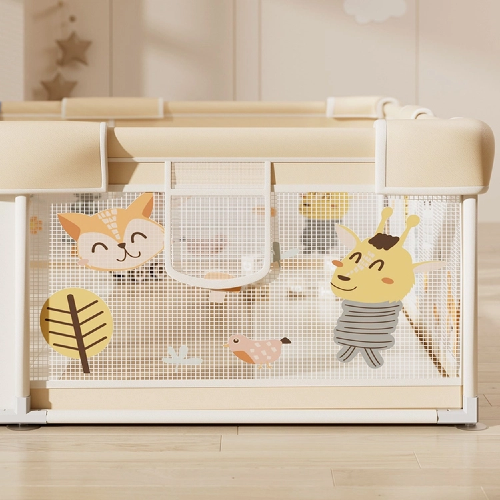
Types of Baby Playpens
Type | Description | Key Benefits |
Foldable & Portable | Lightweight, collapsible | Easy to transport and store, suitable for travel or small spaces |
Modular & Expandable | Panels can be added or removed | Customizable size, grows with the child, long-term usability |
Playpens with Interactive Features | Includes sensory panels, toys, or activity boards | Supports cognitive, sensory, and motor development while encouraging engagement |
Selecting the appropriate type depends on household space, the child’s age and developmental needs, and desired functionality, balancing convenience with developmental support.
Considerations Before Buying
Age and Developmental Stage
Parents should evaluate their child’s abilities before purchasing a playpen. Crawling, sitting, standing, and walking milestones influence the type of playpen that will provide both safety and developmental support.
Home Space and Placement
Assess the available space and ensure the floor is level and stable.
Consider traffic flow in the room and proximity to household hazards.
Additional cushioning or mats may enhance safety and comfort.
Materials, Durability, and Ease of Cleaning
Non-toxic, durable materials are essential for long-term use.
Removable or wipeable mats and panels simplify hygiene maintenance.
High-quality materials ensure the playpen withstands active use and provides lasting value.
Budget and Long-Term Usability
Consider the initial cost alongside potential long-term benefits.
Modular and expandable designs may cost more initially but provide extended usability and growth adaptability.
Common Misconceptions About Playpens
Limiting Freedom or Independence
Many parents fear that playpens restrict movement. However, when used appropriately, they offer a structured environment for safe exploration, encouraging independence while reducing the risk of injury.
Safety Myths
Myth: Playpens are only for passive containment. Reality: They can support active play and skill development.
Myth: Babies will become overly dependent on playpens. Reality: Proper use fosters confidence, autonomy, and self-directed play.
Maximizing Benefits
Rotate toys and sensory elements to maintain engagement.
Adjust configuration as the child grows to provide appropriate space.
Ensure regular supervision to maximize safety and developmental benefits.
Conclusion
Baby playpens are an essential and practical tool for modern parenting, offering a combination of safety, developmental support, and convenience. They provide a secure space where infants and toddlers can explore, play, and grow, while parents enjoy peace of mind knowing their child is protected. Selecting an age-appropriate, durable, and adaptable playpen allows families to create an environment that promotes motor, cognitive, and sensory development, supporting a child’s growth at every stage.
For parents seeking high-quality playpens, Wenzhou Fanle Education Technology Co., Ltd. offers expertly designed products that prioritize safety, comfort, and long-term usability. Their playpens are crafted from non-toxic, child-friendly materials and designed to accommodate a child’s development over time. By choosing products from this trusted manufacturer, families can ensure both immediate convenience and lasting value.
Parents interested in exploring a wide range of safe and versatile playpen options, or seeking guidance on selecting the ideal model for their child, are encouraged to contact Wenzhou Fanle Education Technology Co., Ltd. Their professional team can provide personalized advice and help create a secure, engaging, and enriching play environment for every baby.
FAQs
Q1: Are baby playpens safe for all ages?
Yes, when used according to age guidelines and manufacturer instructions, playpens provide a safe environment for infants and toddlers.
Q2: Can playpens help with independent play?
Absolutely. Playpens allow babies to explore safely, build confidence, and practice decision-making skills.
Q3: How long should a baby stay in a playpen?
Sessions should be short and frequent, based on the child’s age, activity level, and attention span.
Q4: Are playpens only for indoor use?
No. Many modern playpens are portable and suitable for safe outdoor surfaces.
Q5: What features should parents prioritize?
Look for safety certifications, sturdy construction, non-toxic materials, ease of cleaning, and age-appropriate design.
Q6: Do playpens limit a baby’s development?
No. When used appropriately, playpens encourage motor, cognitive, and sensory growth, as well as independent play.
Q7: Can playpens be used long-term?
Yes. Modular and expandable designs allow the playpen to accommodate growth, providing long-term usability.
Q8: How should a playpen be maintained?
Clean panels and mats regularly, sanitize toys, inspect gates and locks, and replace worn or damaged parts promptly.


