The Importance of Proper Playpen Setup
Parenting today requires a careful balance between ensuring the safety of babies and fostering their natural curiosity. Babies are constantly moving, exploring, and interacting with their environment, which makes creating a secure and structured play area critical. Baby playpens provide this controlled environment, allowing babies to explore safely while giving parents peace of mind. Proper setup is essential because even minor errors in assembly or placement can compromise safety, potentially exposing infants to preventable accidents.
A properly set up playpen offers more than safety—it supports developmental growth. Babies can practice crawling, rolling, standing, and reaching for toys within a confined, secure area. These activities help build motor skills, coordination, and spatial awareness. Additionally, a well-maintained playpen contributes to household organization, reduces mess, and simplifies supervision for parents, especially in busy or compact living spaces. In this article, we explore detailed guidance on choosing, assembling, and maintaining baby playpens, ensuring a safe, stimulating, and versatile environment for young children.
Understanding Baby Playpens
Definition and Core Features
A baby playpen is a specially designed, enclosed area that provides a safe space for infants and toddlers to play or rest without constant parental intervention. Unlike general play areas, playpens are engineered to protect babies from hazards while still allowing freedom of movement and interaction with toys.
Key components include:
Panels: Typically constructed from durable, non-toxic materials, panels form the walls of the playpen and prevent babies from wandering into unsafe areas.
Gate: Provides easy access for parents while remaining securely closed to prevent babies from exiting without supervision.
Cushioned Mat/Base: Offers a comfortable surface for play, reduces the impact of minor falls, and can improve the baby’s sense of stability.
Materials: Modern playpens use non-toxic, hypoallergenic, and easy-to-clean materials to ensure both safety and hygiene.
The combination of these features ensures that the playpen functions as a reliable, long-term space for play, rest, and early developmental activities.
Types of Baby Playpens
Different types of playpens offer varying levels of flexibility and functionality, allowing parents to select the model that best fits their living space and lifestyle.
Type | Features | Best For |
Traditional | Fixed walls, highly durable | Long-term home use |
Foldable | Collapsible for easy storage | Small spaces, travel-friendly |
Modular | Panels can be rearranged | Flexible layouts and growing children |
Indoor/Outdoor | UV-resistant, waterproof | Multi-purpose use in various environments |
Choosing the appropriate type ensures that the playpen aligns with household needs, supports the baby’s developmental stage, and maximizes both safety and usability.
Choosing the Right Location
Importance of Surface Stability
The location of a playpen greatly impacts its stability and effectiveness. Always place a baby playpen on a flat, level surface to prevent tipping or accidental movement. Surfaces such as hardwood floors, level tiles, or firm carpets are ideal. Avoid placing playpens on uneven areas, inclines, or slippery surfaces, as these increase the risk of falls and compromise safety.
Avoiding Hazards
Before setting up the playpen, inspect the surrounding area and remove any potential hazards. Keep the playpen away from:
Electrical outlets, cords, or wires that could pose strangulation risks
Sharp-edged furniture or objects that could cause injury
Stairs or elevated platforms
Direct sunlight, heaters, or air vents that could create discomfort or temperature risks
Creating a safe perimeter around the playpen ensures the baby can explore freely without exposure to avoidable dangers.
Accessibility and Supervision
Although playpens provide a controlled environment, supervision remains essential. Place the playpen within easy view of caregivers to allow quick intervention if needed. Proper placement ensures babies have freedom to explore while parents maintain confidence that they can monitor safety effectively.
Preparing the Playpen Components
Unpacking and Inspecting Parts
Before assembly, carefully unpack all components and verify completeness. Essential parts often include:
Wall panels and connectors
Gate and locking mechanisms
Cushioned mat or floor base
Additional accessories such as toys or interactive elements
Check each part for damage or defects. Even small cracks or missing connectors can compromise the integrity of the playpen, making inspection a critical first step.
Understanding Instructions and Safety Guidelines
Thoroughly reading the instruction manual is crucial. Each playpen may have unique assembly requirements, safety recommendations, and weight or age limitations. Following these guidelines ensures the playpen functions as intended and meets safety standards.
Organizing for Assembly
Arrange all components systematically before starting assembly. Sorting panels, connectors, mats, and accessories simplifies the process, reduces errors, and ensures that the setup can be completed efficiently and safely.
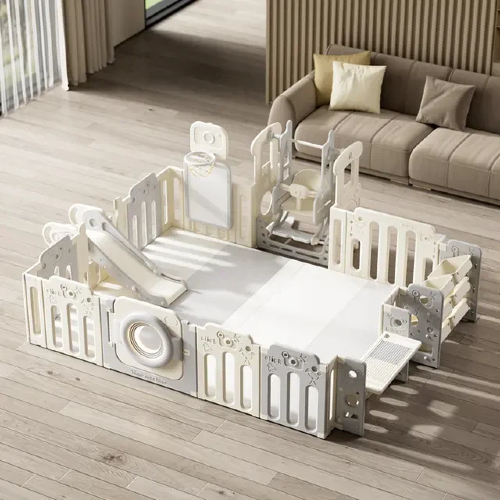
Step-by-Step Playpen Assembly
Step 1: Prepare the Base
Lay out any included mat or cushioned base first. Ensure it covers the intended area evenly and lies flat on the surface. This provides comfort, enhances stability, and reduces the risk of slips or discomfort for the baby.
Step 2: Connect Panels
Attach the panels according to the manufacturer’s instructions. Modular playpens may allow multiple configurations, so select the layout that best fits your space. Ensure each panel is fully secured and upright, with connectors properly engaged to prevent gaps or instability.
Step 3: Install the Gate
Attach the gate and carefully test the locking mechanism. It should operate smoothly for adults while remaining securely locked to prevent babies from exiting unattended.
Step 4: Test Stability
After assembly, gently push and pull each panel to confirm that the playpen is stable. Ensure no panels wobble or shift under pressure, as this could compromise safety during active play.
Step 5: Add Accessories Safely
If including toys or cushions, make sure they are age-appropriate, free of small parts that could be swallowed, and placed to allow free movement. Maintaining an uncluttered interior minimizes risks while still providing stimulation.
Safety Checks After Setup
Secure Panel Connections
Check that all panels and connectors are tightly fitted. Loose panels can create tipping hazards or gaps where a baby could become trapped.
Locking Mechanisms
Verify that all gates and latches function correctly. Test multiple times to ensure reliability and ease of adult use while preventing accidental opening.
Gap Inspection
Inspect the perimeter of the playpen for gaps between panels or mats. Even small spaces can pose entrapment risks for fingers, toes, or toys.
Mat Security
Confirm that the base mat or flooring is firmly positioned and non-slip. Mats that shift during play can lead to accidental falls, reducing safety.
Maintenance and Regular Inspection
Routine Checks
Conduct weekly inspections to identify loose panels, broken connectors, or worn materials. Regular maintenance ensures the playpen remains safe and functional over time.
Cleaning and Hygiene
Keep the playpen clean to protect the baby’s health. Wipe down panels with a damp cloth and mild, non-toxic cleaner. Wash mats according to manufacturer guidelines. Clean any toys or accessories used within the playpen regularly.
Adjustments for Growth
As the child develops, modular or expandable playpens can be reconfigured. Adjust panel layouts or expand the playpen to accommodate increased mobility, ensuring safety and usability for different developmental stages.
Common Mistakes to Avoid
Mistake | Consequence | Solution |
Uneven placement | Tipping hazards | Place on flat, stable surfaces |
Ignoring instructions | Improper assembly | Follow manuals carefully |
Overcrowding with toys | Restricted movement, potential hazards | Use age-appropriate toys and leave sufficient space |
Skipping inspections | Wear or damage goes unnoticed | Inspect weekly for safety and durability |
Avoiding these mistakes ensures the baby playpen provides maximum safety, convenience, and long-term value.
Conclusion
Proper setup and maintenance of baby playpens provide a secure and stimulating environment where babies can safely explore, play, and develop important motor and cognitive skills. By selecting the right location, assembling components carefully, performing regular safety checks, and maintaining the playpen, parents can ensure it remains a reliable space for daily use. A well-designed playpen encourages independent play, keeps toys and mess contained, and offers parents peace of mind. For families seeking high-quality, durable, and thoughtfully crafted playpens, Wenzhou Fanle Education Technology Co., Ltd. offers a wide range of products designed to meet both safety and developmental needs. Their solutions combine functionality, comfort, and long-term usability, making them an excellent choice for creating a versatile and safe play area. Contacting the company can help parents find the ideal playpen tailored to their child’s growth and household requirements.
FAQs
Q1: How long does it take to set up a baby playpen?
Setup usually takes 5–20 minutes, depending on complexity and size. Modular models may require slightly more time.
Q2: Can I place a baby playpen on carpet or uneven surfaces?
Flat, stable surfaces are recommended. Firm carpets are acceptable, but avoid uneven or soft areas that compromise stability.
Q3: How often should I inspect the playpen?
Weekly inspections are recommended to check for loose panels, damage, or wear. Mats and accessories should also be cleaned regularly.
Q4: Can I add toys inside the playpen?
Yes, but only age-appropriate toys that are large enough to avoid choking hazards and maintain space for free movement.
Q5: Are foldable playpens safe after repeated assembly and storage?
Yes, provided all locking mechanisms are fully engaged and regular inspections are conducted to ensure no wear or damage.


