Why Choosing the Right Playpen Matters
Parenting in today’s fast-paced world requires careful planning to ensure both the safety and developmental growth of babies. Infants are naturally curious, constantly exploring their surroundings, crawling, standing, reaching for objects, and interacting with their environment. While this curiosity is essential for cognitive and motor development, it also exposes babies to numerous potential hazards within a household. In this context, baby playpens have emerged as a critical tool for modern parents, offering a controlled and secure space for children to explore safely.
Selecting the right playpen is far more than simply purchasing a confined area. The ideal playpen balances safety, comfort, and functionality while supporting the baby’s development and providing convenience for parents. A well-chosen playpen encourages babies to explore independently, strengthens motor skills, improves spatial awareness, and fosters early learning through safe interaction with age-appropriate toys. It also helps parents manage living spaces effectively, keeping toys organized, minimizing mess, and simplifying supervision without compromising safety.
This comprehensive guide aims to equip parents with all the knowledge necessary to choose the perfect baby playpen. We will cover the various types available, essential features, material considerations, size and space requirements, safety protocols, maintenance, long-term value, and key features to prioritize. By the end of this article, parents will be able to make informed decisions that maximize both safety and usability for their child’s play environment.
Understanding Baby Playpens
Definition and Purpose
A baby playpen is a specialized, enclosed area designed to provide a secure, controlled environment for infants and toddlers. Unlike a general play area, which may expose children to potential hazards, a playpen ensures that babies can explore freely while remaining safely contained.
The primary purposes of a baby playpen include:
Safety: Preventing access to dangerous areas, such as electrical outlets, staircases, or sharp-edged furniture.
Independent Play: Encouraging babies to explore their environment safely, fostering early independence and confidence.
Developmental Support: Allowing babies to practice crawling, standing, and moving, which enhances motor skill development, balance, and coordination.
Household Organization: Containing toys and play items within a defined space, making daily routines and household management more manageable.
A well-designed playpen creates an environment where babies can safely explore, rest, or engage in early learning activities while giving parents peace of mind.
Core Features
Modern baby playpens are designed with multiple safety and convenience features to provide a comprehensive solution for parents:
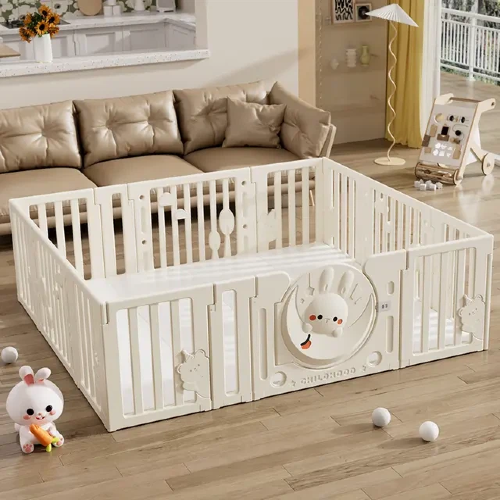
Panels: The walls of the playpen are often made from durable, non-toxic materials such as reinforced plastic, powder-coated metal, or high-quality wood. Panels are crucial for maintaining structural integrity and preventing accidental falls or escapes.
Gate: Provides easy access for parents and caregivers while remaining secure to prevent babies from leaving the playpen unattended. Some gates include child-proof locks for additional safety.
Cushioned Mat/Base: Offers comfort, reduces the risk of injury during falls, and provides a stable surface for babies to crawl or play. Some mats are waterproof or machine-washable, making them convenient for daily use.
Materials: High-quality playpens use non-toxic, hypoallergenic, and durable materials that are easy to clean. Panels, gates, and mats are often treated to resist bacteria, mold, and wear over time.
Understanding these features is essential when selecting a playpen that balances safety, comfort, and long-term usability.
Types of Baby Playpens
Choosing the right type of playpen depends on the intended use, available space, and developmental stage of the child. Each type offers unique advantages and potential limitations.
Type | Features | Advantages | Ideal Use |
Traditional | Fixed walls, solid structure | Highly durable, long-lasting | Dedicated home play area |
Foldable | Collapsible, lightweight | Portable, easy to store | Small spaces, travel-friendly |
Modular | Panels can be reconfigured | Flexible layout, expandable | Growing children, customizable spaces |
Indoor/Outdoor | Weatherproof, UV-resistant | Multi-purpose, versatile | Outdoor play, mixed indoor/outdoor use |
Traditional playpens are known for their robust construction, providing long-term durability. Foldable playpens are ideal for parents who require mobility or limited storage space. Modular playpens offer flexibility and expandability, allowing parents to adjust configurations as their child grows or space requirements change. Indoor/outdoor playpens are designed to withstand different environmental conditions while providing versatile usage options.
Evaluating the home layout, intended use, and mobility needs is critical when deciding which type of playpen best suits a household.
Factors to Consider When Choosing a Playpen
Size and Space
Size plays a pivotal role in ensuring the playpen supports both safety and development:
Adequate Play Area: Babies need enough room to crawl, roll, stand, and move freely. A cramped playpen can limit mobility and affect physical development.
Fit for Home Layout: The playpen should fit comfortably within the intended room, leaving enough surrounding space for caregivers to supervise without obstruction.
Growth Considerations: Selecting a slightly larger playpen allows continued usage as the baby grows, reducing the need for frequent upgrades and ensuring consistent safety over time.
Careful measurement of both the playpen and the available space in the home ensures that the chosen model provides sufficient freedom of movement while maintaining safety boundaries.
Material and Safety
The choice of materials directly affects both safety and durability:
Non-Toxic Materials: Panels, gates, and mats should be BPA-free, lead-free, and free from other harmful chemicals.
Durability: Strong, high-quality materials ensure the playpen withstands frequent use, active play, and long-term wear.
Hypoallergenic Options: Support infants with sensitive skin and reduce risk of allergic reactions.
Easy-to-Clean Surfaces: Smooth, wipeable surfaces and removable mats allow efficient cleaning and maintenance.
High-quality materials enhance the longevity and safety of the playpen, making them a worthwhile investment for long-term use.
Portability and Storage
A playpen’s portability can significantly impact convenience:
Foldable Designs: Easily collapsed for storage or relocation between rooms.
Modular Panels: Allow customization of shape and size, adapting to different spaces as needed.
Lightweight Construction: Simplifies movement without sacrificing stability, ensuring both safety and practicality.
Parents who frequently move their baby between spaces or travel may prefer foldable or modular designs for flexibility.
Features and Accessories
Additional features enhance the functionality and engagement provided by the playpen:
Cushioned Mats: Protects against falls and provides a comfortable play surface.
Interactive Panels: Sensory panels or built-in toys encourage cognitive and motor skill development.
Expandable Panels: Adapt to growing children and changing space requirements.
Child-Proof Gates: Ensure safety while allowing convenient adult access.
Prioritizing features that align with both developmental needs and lifestyle requirements ensures maximum benefit from the playpen.
Safety Considerations
Stability and Panel Strength
A safe playpen must remain stable under active use:
Check that panels are securely connected and cannot tip over.
Verify that hinges, connectors, and fasteners are durable and properly aligned.
Ensure the structure supports crawling, standing, or holding onto the sides without risk of collapse.
Locking Mechanisms
Gates and latches must be both child-proof and convenient for adults. Regularly test locking mechanisms to ensure they cannot be accidentally opened by the baby while still allowing easy access for caregivers.
Avoiding Hazards
Careful inspection ensures the playpen remains free from risks:
Eliminate sharp edges or protruding corners.
Ensure gaps do not allow fingers, toes, or small objects to become trapped.
Confirm that all parts, screws, or connectors are securely fastened and cannot be detached by the baby.
Regular safety checks minimize risks and help maintain long-term security.
Maintenance and Hygiene
Cleaning Panels and Mats
Maintaining cleanliness in a baby playpen is critical:
Wipe panels and gates with baby-safe, mild cleaning solutions.
Removable mats should be machine washable or easily wiped down to remove spills and debris.
Clean toys and interactive elements regularly to reduce exposure to bacteria or allergens.
Inspecting for Wear and Tear
Routine inspections are essential for ensuring ongoing safety:
Examine panels, gates, and locks for any damage or looseness.
Ensure mats remain intact and properly positioned.
Replace worn or broken components promptly to maintain structural integrity.
Longevity and Investment Value
Investing in a high-quality playpen enhances long-term value:
Durable, well-constructed playpens withstand months or years of use.
Modular or expandable features allow adaptation as the child grows.
Prioritizing quality ensures a reliable space that supports development and safety over time.
Budget and Value
When selecting a playpen, it is important to balance cost versus quality:
High-quality playpens often come at a higher initial cost but provide longer-term durability and better safety features.
Lower-cost options may be appealing initially but may require early replacement due to wear or insufficient safety standards.
Consider playpens as an investment, focusing on materials, longevity, features, and adaptability to future needs.
Parents who weigh both price and functionality are more likely to select a playpen that delivers long-term value.
Conclusion
Choosing the right baby playpen is more than a simple purchase—it’s an investment in both your child’s safety and developmental growth. A thoughtfully selected playpen provides a secure space for independent play, supports motor and cognitive skill development, and helps parents maintain an organized and safe home environment. Factors such as type, size, materials, features, portability, and long-term usability should all be carefully considered to ensure the playpen meets both immediate and future needs.
For parents seeking high-quality, durable, and versatile options, Wenzhou Fanle Education Technology Co., Ltd. offers a wide range of expertly designed baby playpens that prioritize safety, comfort, and adaptability. Their products are crafted with non-toxic, child-friendly materials and innovative designs to grow with your child. By choosing a playpen from a trusted manufacturer, families can create a safe, stimulating environment that encourages exploration and learning.
To explore their full selection or discuss the best options for your child, parents are encouraged to reach out directly to Wenzhou Fanle Education Technology Co., Ltd.. Their knowledgeable team can provide guidance and recommendations to ensure you select the ideal playpen for your baby’s needs.
FAQs
Q1: What is the best type of playpen for small homes?
Foldable or modular playpens are ideal because they can be collapsed or reconfigured to save space.
Q2: How do I know if a playpen is safe?
Ensure panels are sturdy, gates are child-proof, materials are non-toxic, and there are no sharp edges or gaps.
Q3: Can playpens be used both indoors and outdoors?
Yes, but outdoor playpens should be UV-resistant, weatherproof, and placed on stable surfaces.
Q4: What features should I prioritize for long-term use?
Expandable panels, adjustable gates, and durable materials allow the playpen to grow with your child.
Q5: How often should I inspect the playpen?
Weekly inspections are recommended to detect any wear, loose connectors, or damage.
Q6: Are cushioned mats necessary?
Yes, cushioned mats enhance comfort, reduce injury risk, and provide a safe surface for active play.
Q7: How do I maintain hygiene in a playpen?
Wipe panels regularly, wash mats per manufacturer instructions, and sanitize toys and interactive elements.
Q8: What is the ideal size for a playpen?
A size that allows babies to move freely while fitting comfortably in the intended space is recommended. Consider slightly larger options for long-term use.


